Professional Identity · o20v.pro
O20V.
I'm a Technologist, an IT Leader, a Product Manager,
a Founder, an Esports Executive and a Strategist.
Which version of that do you need?

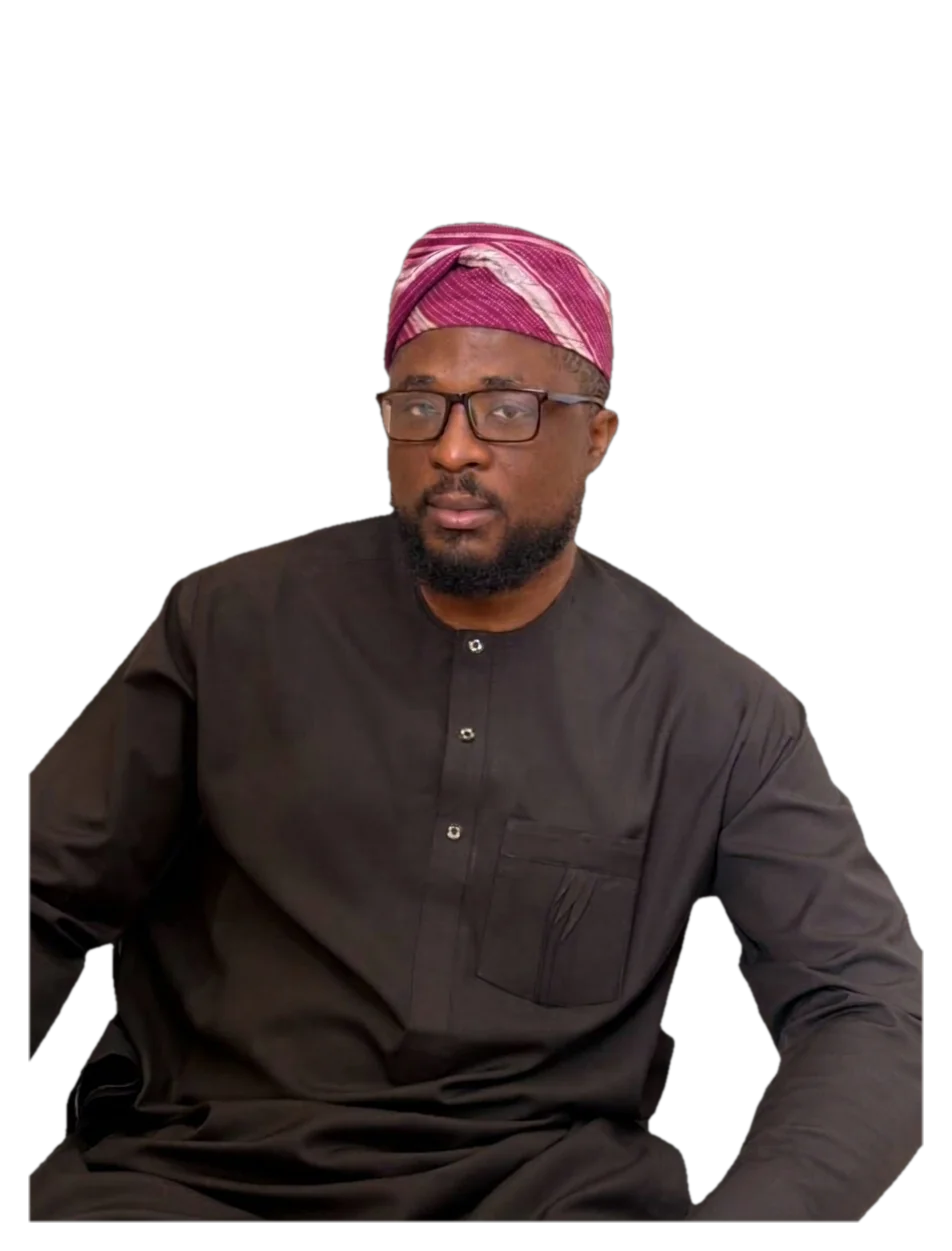
Six versions. One person.
I'm a Technologist, an IT Leader, a Product Manager,
a Founder, an Esports Executive and a Strategist.
Which version of that do you need?
o20v is a professional alias: a clean, searchable, intentional identity built to separate the work from the person.
The name is a compression of Oludemi-Adelaiye Tsardav, the same way a16z compresses Andreessen Horowitz into something that functions like an institution rather than a person.
Search o20v and you find the work. Search Tsardav and you find the human. Both are real. Both are deliberate. This site is the former.
Oludemi-Adelaiye Tsardav
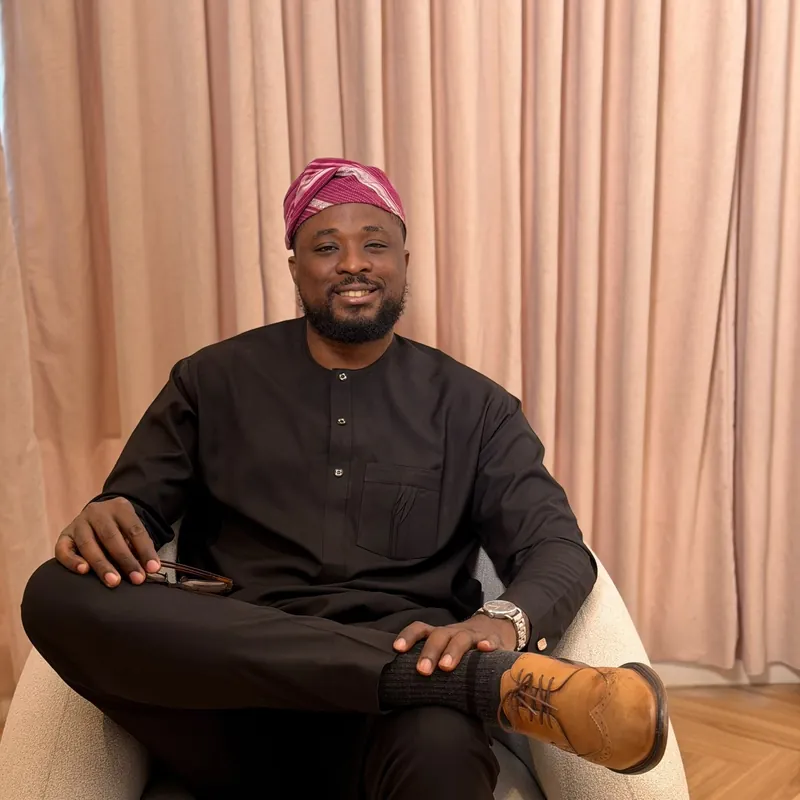
I don't build companies because it's fashionable. I build them because I see gaps that shouldn't exist and I can't leave them alone. From running one of Africa's longest-standing esports organisations to serving as the digital partner to a national science agency, my ventures share one thesis: Africa has everything it needs except the infrastructure to unlock it.
I'm building that infrastructure, one venture at a time. Not every bet has paid off. Fresh Nazaar taught me more in fourteen months than most people learn in a decade, and I carry those lessons into everything I build now.
African businesses in traditional and emerging industries were being left behind digitally. Not for lack of ambition, but for lack of accessible, contextually relevant digital capacity. Cyzygy exists to close that gap: digital strategy, technology integration, esports management, marketing support and youth-focused tech education.
Today Cyzygy serves as principal IT and digital partner to NASENI, Nigeria's National Agency for Science and Engineering Infrastructure, and works with organisations including GMC Nigeria, alongside employer-of-record services for international clients hiring Nigerian talent.
Status: Active since June 2024. The evolution of The Crore Solutions Company.
African esports was growing fast but unevenly. Talented players existed everywhere and were visible nowhere. UPAGAINSTHELL started informally in 2022 and incorporated in February 2024, built brand-first: players, content creators, identity and commercial strategy at the same time, because brands attract sponsors and sponsors make teams sustainable.
UAH launched the #1 female-only competitive team in West Africa, secured key sponsorships and became one of the legacy organisations of the African Call of Duty: Mobile scene. The full competitive story lives on the Esports rail.
Status: Active. Informal since 2022, incorporated February 2024.
The market needed a consultancy that could think at a high level and execute at a technical level. Most could do one. Crore was built to do both. Over five years it served clients across fintech, food tech, healthcare and media, from IT strategy and infrastructure to product development and project management, and built a reputation for shipping rather than advising.
Status: Concluded, December 2018 to August 2023. Evolved into Cyzygy Digital.
Fresh Nazaar folded in April 2021. The market timing, unit economics and operational complexity of fresh food logistics in Lagos proved insurmountable at the funding level available.
It remains one of the most instructive chapters of the o20v story: a clean example of building something real, watching it work technically, and still having it not survive. That lesson lives in every venture since.
Status: Closed, March 2020 to April 2021.
"Tsardav thinks about building companies the way a chess player thinks about the board, always three moves ahead. Working with him on UPAGAINSTHELL changed how I understand what it means to build an esports brand in Africa from scratch."
I'm actively building in African esports and digital technology. If you're an investor, a potential partner, or an organisation looking for founder-level strategic engagement, I want to hear from you.
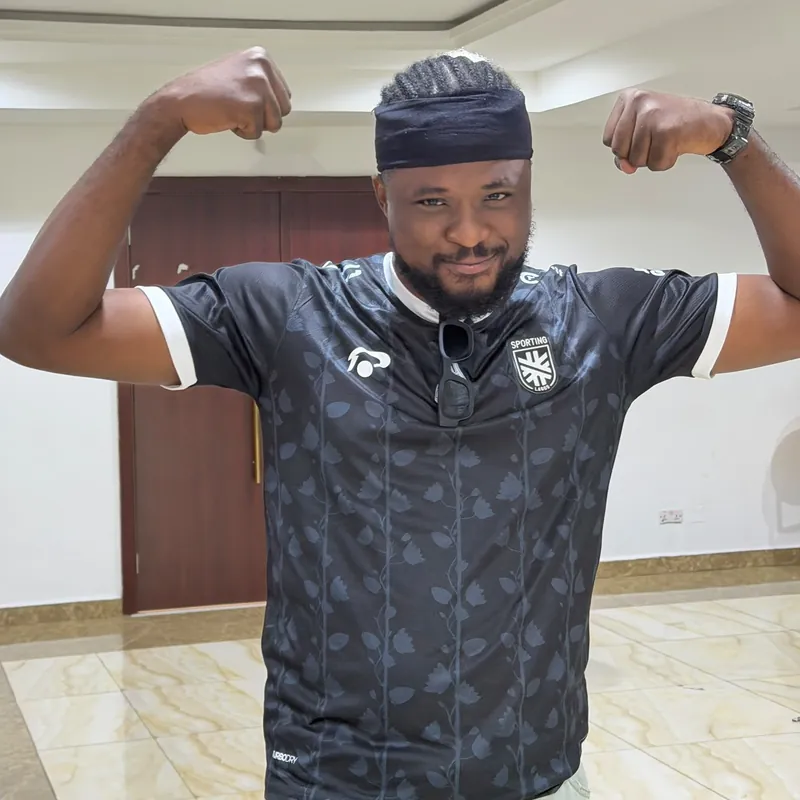
I've been inside the African Call of Duty: Mobile scene since 2020. First embedded with other organisations, learning how competitive gaming actually works on this continent, then building my own. The through-line predates any paperwork: build the operational systems that let African talent compete at world level, then get out of the frame and let the results speak.
My name is not always on the jersey. My fingerprints are always on the result. A continental title. The first African team ever to reach the CODM World Championships. An unbeaten run to the 2026 East Africa title in Nairobi, 28 maps played and 28 won.
UAHMT, UPAGAINSTHELL Monarchs TEF, was a three-organisation alliance built for the Carry1st Africa Cup 2026, run by Cyzygy with a roster drawn from four countries on two continents. As Chairman, I owned the architecture: the alliance itself, the commercial strategy, cross-border player logistics and the campaign's path through the bracket.
At Stage 3 in Nairobi the team was crowned East Africa Champions by Call of Duty: Mobile without dropping a single map. 28 played, 28 won. The run put the squad on Kenyan national television and in the country's sports press.
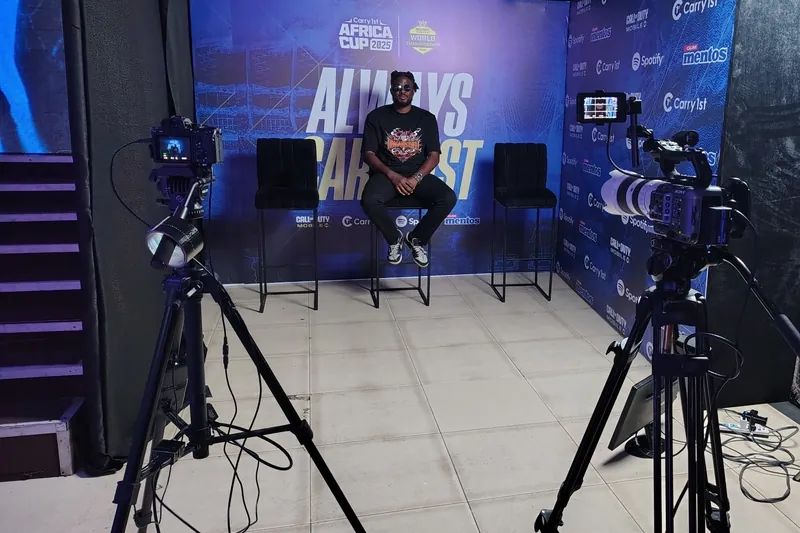
The 2025 Carry1st Africa Cup campaign, run in coalition with B34R CL4N, was the third year of the same operational system and the year it fully paid off. As strategy and operations lead, inside a tight core covering legal, compliance, performance and player relations, I ran the machinery behind a dominant run to the continental title.
African Champions, and with the title, something no African team had done before: qualification for the CODM World Championships. The campaign turned visibility into commerce along the way, including a sponsorship secured with Mentos.
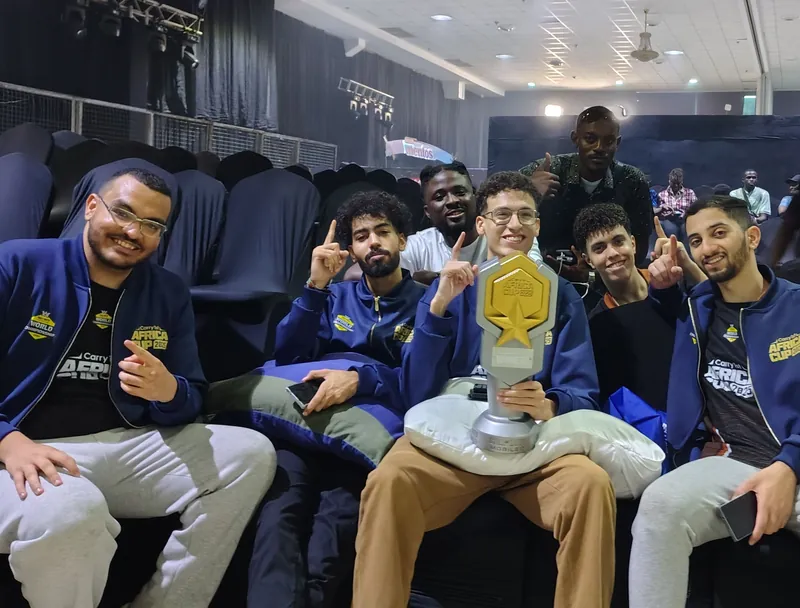
UAH launched informally in 2022 and incorporated in February 2024. Its female roster became the #1 female-only competitive team in West Africa, then went further: it won the T3 bracket of the 2024 Cxmmunity CODM Cup outright against male teams and reached the semi-finals of the T2 Lotus Esports Tournament Season 1.
In 2025 UAH fielded UAX, a joint roster with Xtreme Esports, in GameEvo's MPRO League. Alongside the competitive work I'm building NEXUS, a team management and analytics platform for CODM organisations.
Legacy is not a claim you make for yourself. It's a record other people keep for you.
Running teams is half the work. Since 2023 I've also worked the other side, as adviser and strategist to Carry1st, AER and 10N8E.
For Carry1st, that included broadcast production and on-desk analysis for the 2025 Africa Cup, the same tournament my coalition went on to win. For AER, the role runs deeper: operations and recruitment lead, and strategic adviser on how the organisation competes and grows.
Very few people in the African scene have worked the tournament, the broadcast and the winning team. That vantage point is the asset.
"SeB is one of the most influential people in the CODM Africa scene. The history of this scene will not be complete without acknowledging the work people like him have put in, including building UAH into one of the legacy orgs that has stood the test of time. With more people like him, African esports will be at the top, inevitably."
If you're a brand looking at African gaming audiences, a tournament operator who needs production and strategy, or an organisation that wants to compete rather than just participate, I've worked all three sides of that table at the highest level this continent has produced. Let's talk.
Most people don't think about IT until something breaks. I think about it so that nothing does. For a decade I've built the infrastructure, security posture and service delivery frameworks that organisations depend on without realising they depend on them, from small service teams to a national agency.
Reliable systems aren't glamorous. They're just essential. I build essential things.
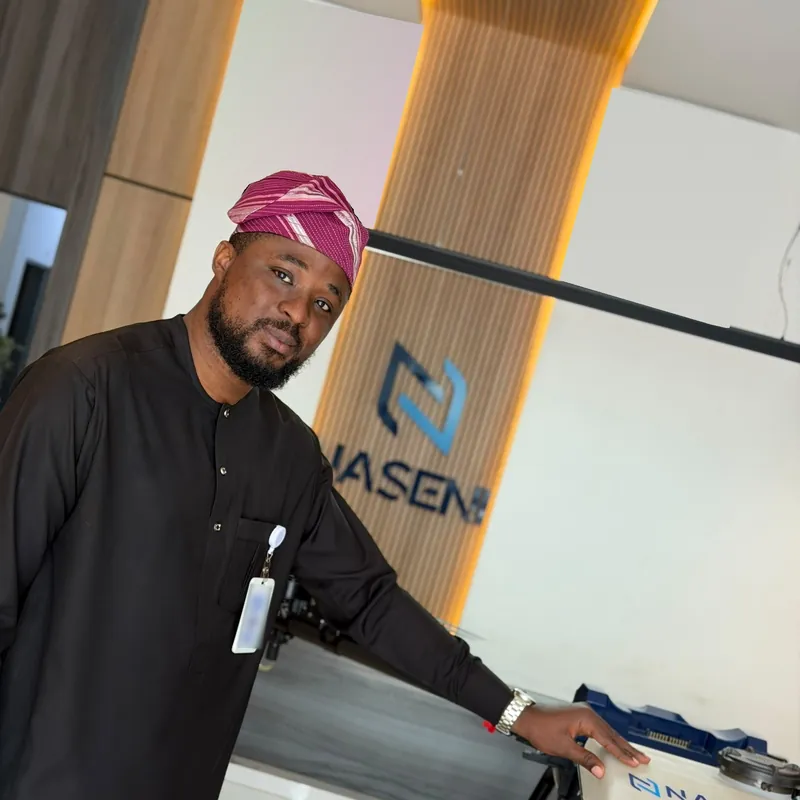
Since November 2025, through Cyzygy Digital, I've served as principal IT and digital partner to NASENI, Nigeria's National Agency for Science and Engineering Infrastructure, and affiliated entities including the NASENI Innovation Hub and NASENI-Troment Biotechnologies.
The engagement opened with the FutureMakers campaign and deepened into foundational work on the NASENI AI Unit: web development, technology and role-stack advisory, and structured support for the recruitment that staffed the unit from the ground up.
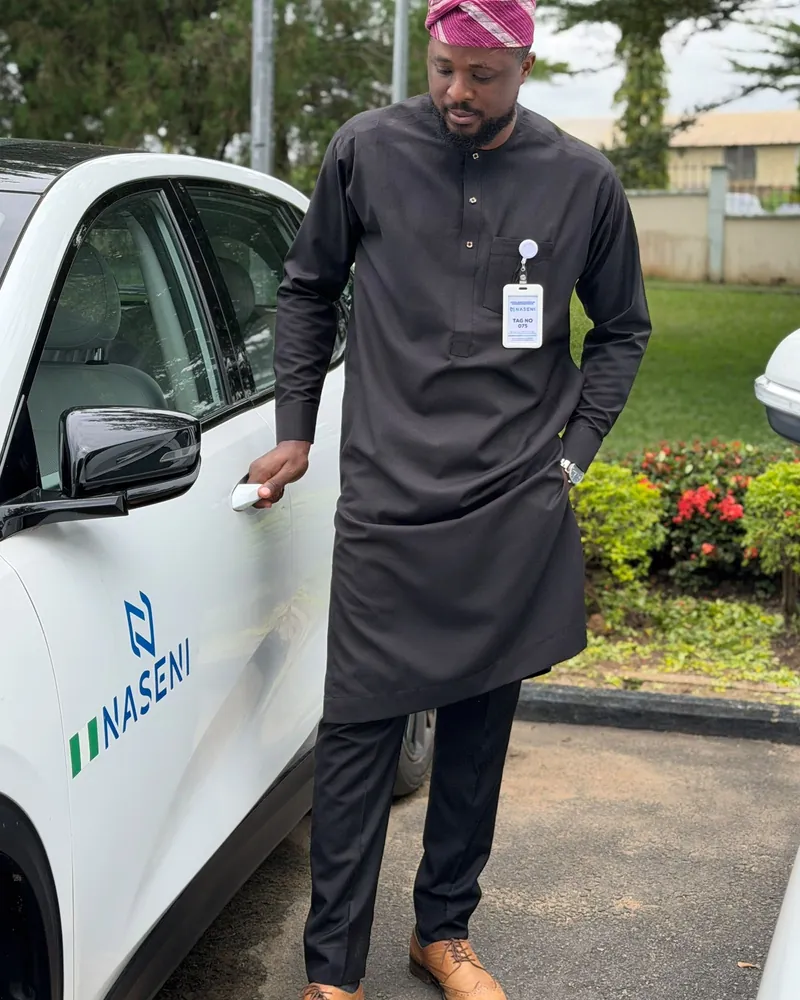
Startups forgive improvisation. National institutions don't. The systems underneath have to be right the first time, and that's the standard this work is held to.
At AfriHealth, stepping in as Interim Engineering Lead in mid-2022 meant walking into an organisation mid-stride and immediately defining how work got planned, reported and executed. IT capability was documented from scratch, and a framework for its ongoing development was handed over, built to outlast the engagement.
At JemiEats the scope was broader: an IT strategy built from nothing, with policies, procedures, timelines, resourcing and budgets aligned to the company's long-term vision, plus requirements for flagship features like Group Ordering and Scheduled Ordering.
Both organisations moved from operating on instinct to operating on infrastructure. The difference isn't visible on a good day. It's everything on a bad one.
At Geeki Support, I managed the IT support services team and owned the full incident lifecycle, from first contact to resolution, with performance tracked against SLAs. Improvements were made before problems became client-facing.
At Tekinology, where I started as an L2 technician in 2015 and went on to run the service team, the work went deeper into infrastructure: root cause analyses, proactive reliability measures, and SLAs defined with the business that were honest rather than optimistic.
Nothing dramatic. Just the quiet confidence of a well-run operation.
"We brought Tsardav in at a moment when our IT infrastructure was genuinely holding the business back. Within weeks he had documented everything, defined the gaps, and started closing them. The framework he left behind is still running the show."
If your organisation's technology is holding you back, or you're not sure whether it is, that's exactly the conversation I'm built for. I don't just audit problems. I build the systems that prevent them.
Product management is not about having ideas. Everyone has ideas.obvious. cut it. It's about knowing which ideas matter, why they matter right now, and exactly what it takes to make them real.
I've shipped in crypto exchanges, regulated money movement, fintech platforms, food tech and SaaS. Different industries, different constraints, same discipline: understand the problem deeply, align the people around it, and deliver something that actually works.
Since March 2026 I've led project and product at Rolla Pay, the consumer money product from Rolla: deposit, send, receive and swap. I joined in January as a delivery and people-operations consultant and moved into the lead role as the product went into build.
I own the roadmap with the founders across MVP, B2B and B2C releases, write the requirements and specifications engineering builds from, and own the product end to end, onboarding, KYC and compliance included. Rolla Pay is registered with FINTRAC in Canada as a money services business. It went from development to launch in about three months, then processed more than $500,000 in its first three months live.
The same engagement covered the team itself: hiring plans, role definitions, structured interviews, performance frameworks, and a QA process built from nothing so every release ships against a defined bar.
Crypto in 2021 moved at a speed most product teams weren't built for. I worked on the core spot and futures trading experience, order placement and order management, in a live, high-volume environment.
That meant specifying advanced order types down to the parameters and behaviour engineering built from: scale orders, a ladder of limit orders across a price range, and TWAP orders, execution sliced over time. Margin, derivatives and liquidation mechanics became requirements and user flows that engineering, design, compliance and operations could all work from at once. In a live trading environment the margin for error is functionally zero.
At Partyra, a mobile-first consumer platform, the emphasis is upstream: market research, competitor teardowns and benchmarking that size the opportunity and set the differentiation leadership is building toward, alongside defining the delivery roles, hiring the team and standing up QA and release readiness.
Three long embedded engagements, all concluded in October 2025. A full year with Moniger's fintech product team owning the quality gate between development and production. Nearly three years running KAWA's product practice. Four years with AlumUnite owning requirements, PRDs and the features that drove acquisition and engagement, while hiring and training the team that runs it today.
Before that, at WePrototype, I delivered client products including HashVest, one of Nigeria's early retail investing apps, alongside PlateauMed, PressOne and AlumUnite.
The measure of a good embedded engagement isn't dependency. It's the opposite.
"Most product managers make you feel like they're managing a process. Demi makes you feel like someone finally understands the problem. The PRDs he wrote for us were the clearest we'd ever seen, and engineering actually enjoyed working from them."
If you need someone who can own the full delivery lifecycle, align a team around what actually matters, and ship things that work rather than things that merely exist, let's talk.
I've been building things on the internet since 2014. Not theorising about building them. Not managing people who build them. Actually building them: websites, web apps, automated workflows, integrated systems, e-commerce and e-learning platforms.
The tools have changed. The instinct hasn't. Give me a problem that needs a technical solution and I'll find the cleanest path from zero to working.
The freelance portfolio spans every major web format: landing pages for HashVest and PlateauMed, full websites for The Scar Radio, news platforms like BallGist and Adeboro, e-commerce for Bazaarr and Fresh Nazaar, an e-learning platform for Educate.ng, and a full web application for AlumUnite.
Each brought its own demands: payment gateways, shipping integrations, multi-language and multi-currency support, backup and security architecture, email deliverability through SendGrid and Mailgun, and SEO.
You cannot bluff a system you've built yourself.
From 2023 to 2024 I built custom systems for insurance and healthcare clients including BalanceMyHormones, Buffer Insurance and BahamasEvac, on Zoho (CRM, Desk, Books, Flow), n8n, NocoDB, Customer.io and Cal.com. Manual processes that were creating errors became automated workflows and integrations.
Good automation isn't measured on launch day. It's measured by whether it keeps working and whether people actually adopt it. High adoption was the consistent outcome.
As co-founder and first CTO I owned the whole stack personally: the web app in WordPress, Elementor, HTML, CSS and PHP, infrastructure, payments, security, and compliance with GDPR, NDPR, ISO and PCI DSS.
The app launched and it performed. The company folded for business reasons technology couldn't solve, and that distinction matters. Building something that works under real constraints, with no engineering team, is its own level of builder.
NEXUS is a team management and analytics platform for Call of Duty: Mobile organisations, being shaped into a modular esports management suite: organisations pick the services they need, with partner integrations instead of everything built in-house.
"We needed a complex e-learning system built fast, built right, and built to last. Tsardav delivered all three without drama. The site has been running cleanly for more than five years without a single major issue."
If you need someone who can think through a technical problem and build the solution, not brief someone else to build it, not manage a team building it, but actually build it, I'm that person. Let's talk about what you need.
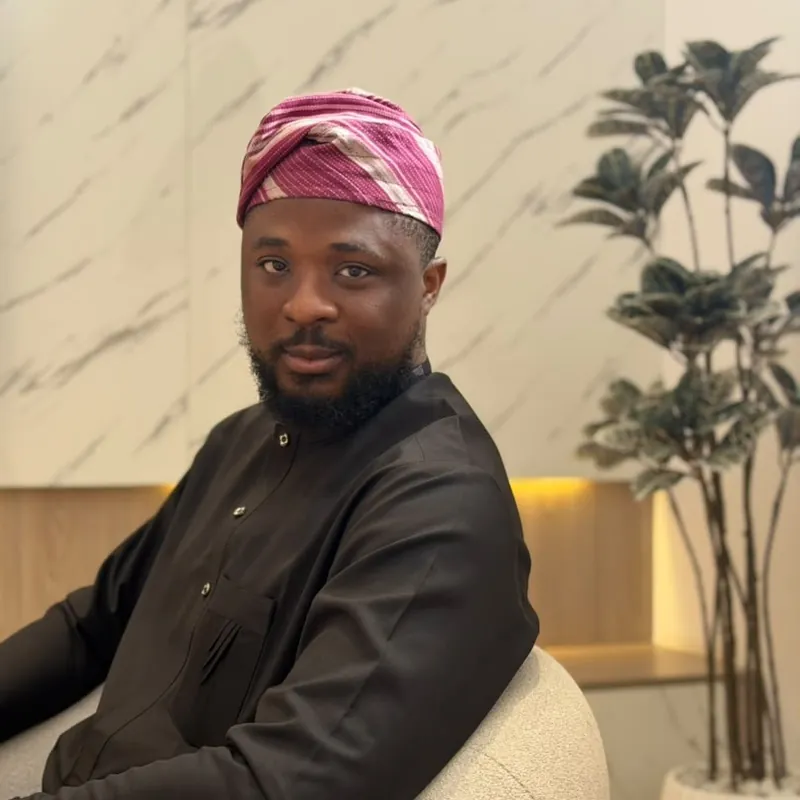
I am not a specialist. I made my peace with that a long time ago, then realised it wasn't a limitation. It was the point. Specialists go deep in one direction. I go deep in many and then look at what they have in common. That intersection is where the interesting problems live.
I learned this craft from practitioners, not textbooks: Mayowa Okegbenle, Debo Odunlami and Mykola Bashlakov among them, people who think about technology and business at a level most professionals never reach. I absorbed how they saw problems before I absorbed what they knew about solving them. That sequencing mattered.
The result is a way of thinking that borrows from wherever the best thinking lives: psychology, sport, politics, history, economics. Technology, business and people don't operate in isolation from the rest of human experience. Treating them as if they do is how you get strategies that look brilliant in a slide deck and collapse in reality.
I have a well-calibrated BS detector. I know what a gimmick looks like because I've seen enough real things to recognise the difference. That instinct isn't a personality trait. It's a professional tool.
There is a particular anxiety that follows generalists around. It arrives at dinner parties, in job interviews, and in the quiet moments between projects, when the question surfaces again: what exactly are you?
Specialists have a clean answer. Generalists have a complicated one, and in a professional world organised around specialisation, a complicated answer feels like a liability. It isn't. Given a defined problem in a familiar domain, a specialist will almost always win. But most problems that matter aren't defined or familiar. They're messy and cross-functional, and the relevant knowledge lives in five disciplines at once.
In those rooms the generalist isn't the weakest person present. They're the only one who can see the whole room.
full piece on Substack, soonNobody is coming to build Africa's digital infrastructure for us. This is not pessimism. It is the most clarifying thing I have ever understood about operating in this market.
External capital arrives with external assumptions. The infrastructure that matters, the kind that compounds, creates local capability and keeps wealth in the ecosystem, gets built slowly and unevenly, usually by people who refused to wait for someone else to go first.
The permission you're waiting for isn't coming. That's the good news.
full piece on Substack, soonWhy the most dangerous word in product strategy is "obviously", and what it reveals about the assumptions you've stopped examining.
The difference between a manager who removes obstacles and a leader who reframes them, and why only one of those scales.
What years in esports taught me about the gap between what African youth culture produces and what African institutions are built to support.
How studying football tactics made me a better product manager. Seriously.
"I've worked with consultants who are smart and consultants who are practical. Tsardav is both simultaneously, which is rare. He has a way of reframing a problem that makes the solution feel obvious in retrospect, even when it wasn't obvious at all before he arrived."
If you're working on something genuinely difficult, where the standard frameworks don't quite fit and you need someone who can think around the problem rather than just through it, that's the conversation I'm built for.